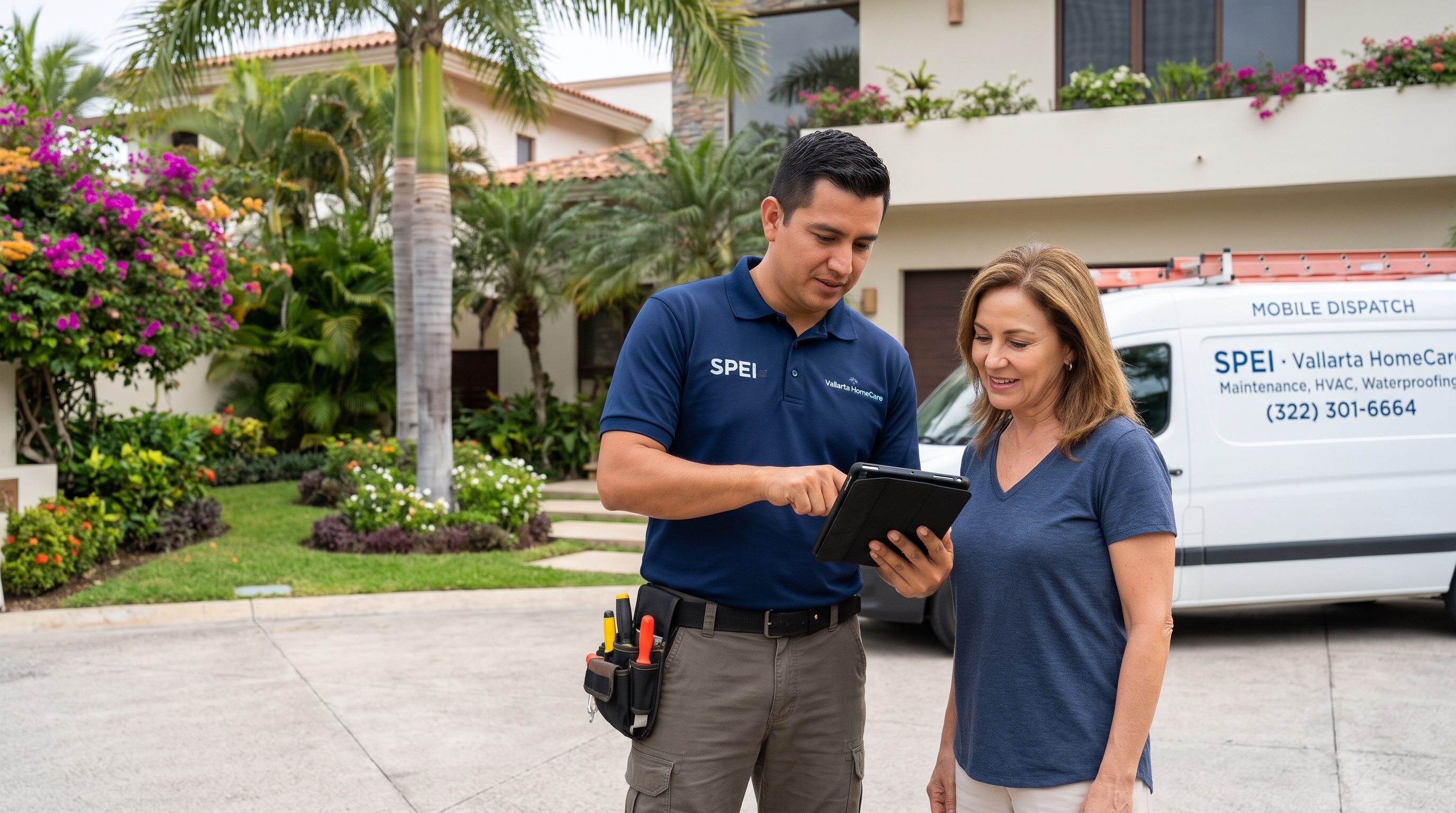
Owning or managing property in a tropical coastal environment comes with unique operational headaches. Learn how proactive climate engineering, anti-corrosive protocols, and storm readiness shield your investments from unrelenting natural wear.
The Real Cost of the Coastal Environment
There is no denying the allure of owning a property along the beautiful coastlines of Banderas Bay or the Riviera Nayarit. However, the very elements that make tropical coastal regions paradise—sun, sea breeze, and heavy seasonal rains—present a relentless, invisible attack on buildings and infrastructure. For property owners, vacation rental managers, and HOAs, maintaining these assets requires moving past reactive patchwork and embracing proactive, high-precision operations.
From saltwater corrosion to humidity-induced mold and tropical storm patterns, coastal property management is a battle against rapid depreciation. Left unchecked, small issues quickly escalate into costly emergency repairs that disrupt guest experiences and erode property value.
The Salt, Humidity, and Heat Threat
Coastal and marine environments demand highly specialized maintenance protocols that standard inland procedures cannot match. Understanding these distinct threats is the first step toward lasting property protection:
- Salty Air and Oxidation: Marine salt acts as a constant corrosive agent, destroying structural rebar, exterior metalwork, and outdoor equipment. Anti-corrosive treatments and specialized coatings are non-negotiable for preserving structural integrity.
- Intense Tropical Humidity: The warm, humid climate acts as a breeding ground for mold, salitre (saltpeter masonry damage), and rapid paint degradation. Proper elastomeric and styrene-acrylic waterproofing, combined with specific anti-humidity masonry solutions, are essential to keep interior spaces safe and dry.
- Heavy Thermal and AC Loads: Air conditioning systems in tropical climates operate under extreme stress. Salt-laden air rapidly corrodes delicate condenser coils, leading to frequent board failures, refrigerant leaks, and soaring energy bills. Ongoing preventive chemical coil cleaning and electronic diagnostics are critical to maintaining efficient, inverter-based climate control.
3 Operational Keys to Protecting Your Coastal Asset
Successfully managing coastal residential or commercial properties requires transitioning from "break-and-fix" to a structured, predictive dispatch approach:
1. Establish a Regular "Envelope" Defense
A building’s exterior envelope—roofs, facades, and windows—is its first line of defense. Sealing structural cracks with elastomeric caulking and applying high-durability liquid waterproofing membranes must be completed before the rainy season hits. Neglecting these areas guarantees water ingress, causing internal remodeling damage and costly structural repair bills down the road.
2. Commit to Scheduled HVAC Inverter Maintenance
In hot coastal climates, an AC failure isn't just an inconvenience; it can ruin a vacation rental's reputation or disrupt a business overnight. Instead of waiting for a breakdown, establish a recurring preventive schedule. Routine chemical coil cleaning, electrical diagnostic checks, and eco-refrigerant level monitoring extend equipment life, lower power consumption, and maintain indoor comfort.
3. Deploy Absentee Oversight and Emergency Preparedness
Many coastal properties sit empty for parts of the year, making them vulnerable to undetected leaks, electrical faults, and sudden tropical storm damage. Utilizing professional property watch services—featuring regular digital logbook inspection reports and storm preparedness checkups—ensures problems are caught before they turn into disasters. When severe weather threatens, having a dispatch team ready to secure storm shutters and inspect structural security is invaluable.
Professional Standards Make the Difference
Protecting coastal properties is a continuous challenge that demands technical expertise and swift coordination. By establishing priority service agreements (SLAs), upfront fixed-rate pricing, and rigorous preventive standards, property managers can ensure their investments survive the tropical environment while providing a seamless, stress-free experience for occupants and guests alike.